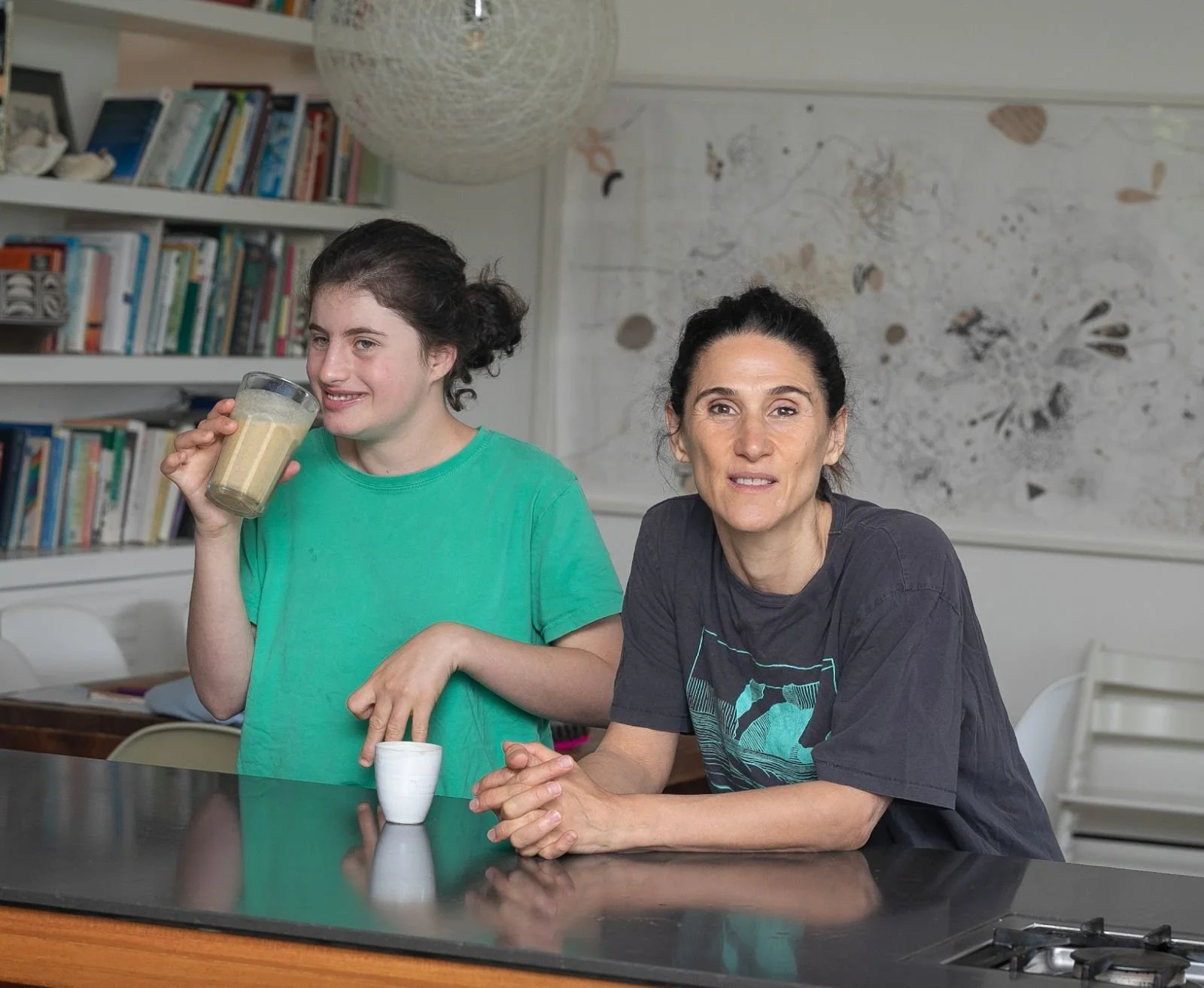
8-week regulation journey: The Foundation for Text-Based Communication
| with Tanya Yarkoni and Katie Kittle


“I’m no stranger to self help, mindfulness, mindset shifts etc, and seeing my own trauma and nervous system through the lens you present is EXACTLY what I have needed. What I didn’t even know I needed. Thank you for doing this work and guiding me into freedom from my own loops and limitations.”
- Caregiver mom
An 8-week journey in self-regulation + co-regulation for text-based communication families/caregivers.
Most caregivers don’t struggle because they don’t know what to do. They struggle because they can’t access what they know, in the moments that actually matter.
When your child is dysregulated, when you’re exhausted, when something in you gets triggered, your nervous system goes into survival mode, and no matter how much you understand, you lose access to the response you actually want to give.
This isn’t about trying harder. It’s about learning how to come back to a more regulated state, so the space between you and your child feels more connected, and communication can unfold more naturally.
What begins to change is your capacity:
• You catch the moment before you react
• You feel the shift before the spiral
• You stop second guessing every interaction
Not always, but more often, and that changes everything.
Restore Nervous-System Balance, Ease Communication, and Feel Like Yourself Again
Caregiver, coach, and author Tanya Yarkoni, together with nervous system regulation specialist Katie Kittle, guide this 8-week journey in self-regulation and co-regulation for families—rooted in lived caregiving experience, professional expertise, and years of working within supportive caregiver communities. The program offers a carefully sequenced journey designed to build nervous system safety, relational steadiness, and the internal conditions that support communication. By the end, many caregivers feel steadier, less reactive, more present, and more supported—both within themselves and in community.
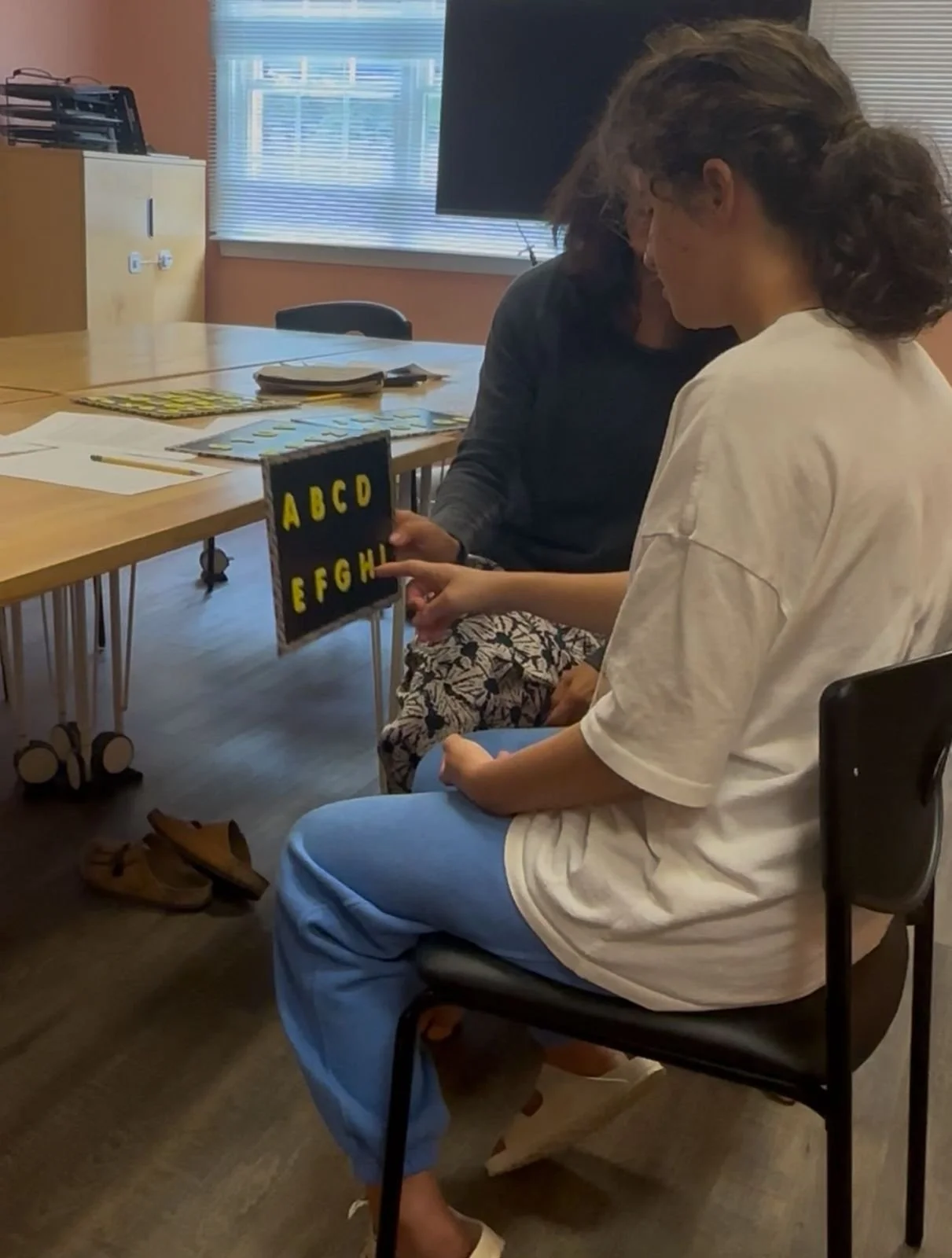
“When my motor system is overwhelmed, my thoughts are trapped inside. I need someone calm and steady with me so my body can organize enough for my intelligence to come through.”
-Ido Kedar, non-speaking autistic author, speller

“Being in a group where people actually understand this changed everything.”
“For the first time, I could see how my state was affecting my child, and what to do about it.”
“I didn’t realize how much I was carrying until I heard others say it out loud.”
Who is this for?
Parents/caregivers practicing text-based communication with their nonspeaking/minimally speaking loved ones to make communication and connection flow and feel safer.
Caregivers who notice themselves “managing” or “controlling” because the stakes feel so high.
Families who want a nervous-system lens for stims, silence, injurious behavior and day-to-day regulation.
Anyone who wants a grounded approach that respects both the child’s autonomy and the caregiver’s limits.
What you’ll get in this program:
8 weekly teaching + guidance sessions (each 1.5 hours) to strengthen self-regulation and co-regulation both during practice sessions and beyond.
Nervous-system care (mindfulness, visualization, and somatic tools) created for caregivers experiencing chronic overload.
Support for the moments that tend to derail sessions: stims, silence, injurious behavior, urgency, and mental scattering.
Guided mindfulness & somatic practices that deepen present-moment awareness and help you experience a steadier, more grounded internal baseline.
A practical daily-mapping tool to identify what helps you regulate and how to plan for it.
Access to a community of like-minded families in a private WhatsApp group.
Meet the Facilitators
-
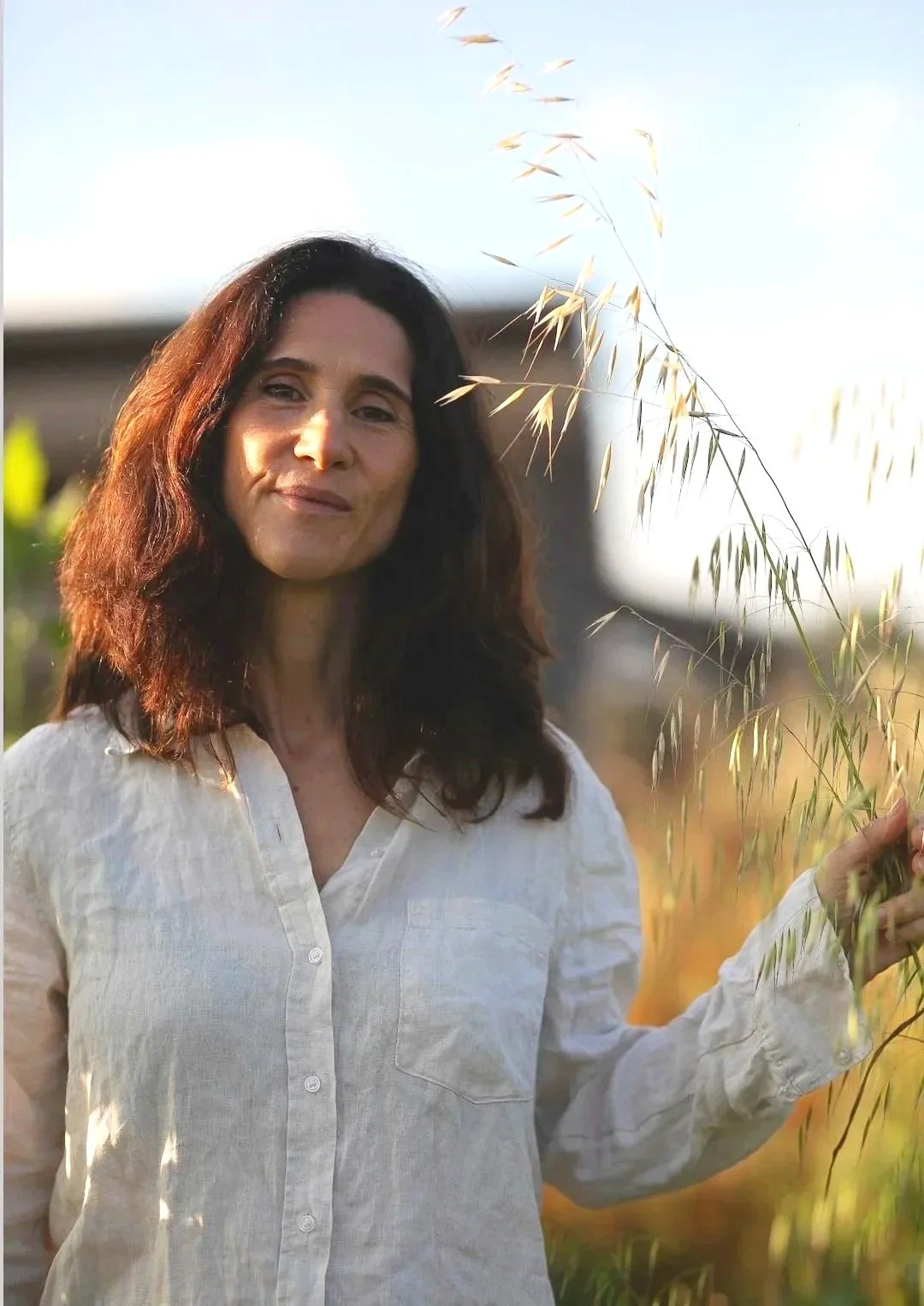
Tanya Yarkoni is a caregiver, coach, and dedicated collaborator to her emerging speller, 18-year-old non-speaking autistic daughter, Leia. Her work with caregivers, offered through her coaching practice, Integrative Caregiving, and vibrant online communities, is rooted in science-backed research, lived experience, and decades of meditation practice. Tanya is also the author of an upcoming book on caregiver survival intelligence, which explores the neurobiology and emotional patterns that shape long-term caregiving. Drawing from her own journey, she integrates neuroscience, psychology, mindfulness, and practical tools to help caregivers shift their internal state, interrupt survival-driven patterns, and reclaim emotional steadiness. She guides caregivers to use the challenges of this role as a catalyst for deep personal growth and meaningful transformation.

-
Katie Kittle is a nervous system regulation specialist and the founder of Support the Supporters: nervous system care for families, caregivers & practitioners in the neurodivergent community. With training in kinesiology, somatic breathwork, massage therapy, and trauma-informed facilitation, Katie offers a grounded, holistic, and therapeutic approach. Her work blends breathwork, movement, and conscious touch to support reconnection with the body’s natural capacity for regulation. She is on staff at Autistically Inclined family text based communication camps and works closely with families navigating long-term caregiving. Katie’s intention is to create a steady, compassionate space where caregivers can feel less alone and more supported, resourced, + connected to their bodies.
Example of weekly somatic practice
The 8-week journey
-
How do we actually regulate ourselves each day? We explore how subconscious conditioning shapes our behavior before choice is available—why you tighten, brace, rush, or monitor without meaning to—and how regulation develops through experiences that support safety and flexibility in the nervous system, rather than reliving old survival patterns.
-
How your nervous system shapes the emotional field between you and your child. We shift from managing their state to stabilizing yours—and why that changes everything.
-
STIMS support regulation across many states: overload, anticipation, under-stimulation, and quiet presence. We explore what stims may be doing, why they can trigger parents/ caregivers, and how a nervous-system/energetic lens changes your response. -
When words are absent, something else is always present. We explore what arises in silence—assumptions, emotions, stories, longing—and how to open space for freedom and new ways of being together.
-
Your child isn’t looking for intervention—they’re orienting to whether your nervous system feels safe to be near. This week offers somatic and mindfulness practices to cultivate steadiness and safety in your system.
-
This week explores how caregivers respond internally under chronic pressure—not to evaluate or fix those responses, but to understand them as human adaptations to an extraordinary role. Drawing on the principles of self-compassion, we create space to relate to ourselves and others with steadiness, perspective, and care, especially in a role few are trained for and most of us carry alone.
-
In text-based communication, caregivers often find themselves either mentally scattered or intensely focused on guiding and directing. This week invites a different stance — stepping back, quieting internal activity, and allowing the process to unfold without judgment. Through meditation and visualization, we will begin to notice how our collaboration becomes more grounded when it arises from stillness and presence rather than urgency.
-
This week focuses on identifying when and where you feel most regulated, and how small shifts in habits and beliefs can make a meaningful difference. You will be guided to use a practical tool to help you map your daily rhythms, along with a guided meditation to reflect, refine, and mentally rehearse supportive changes, allowing regulation to become something you live into rather than work at.
“Bringing hope to caregivers is so important. Nonspeakers really need a feeling of calm, safe support.
If you’re not regulated, we can’t be expected to be regulated.
If you’re hopeful then we can hope too.”
— Joshua Greiner, nonspeaking autistic artist, poet & advocate

FAQs
-
About 90 minutes per week, with flexibility to engage in ways that fit your life.
-
Yes—all sessions will be recorded and available to watch on your own schedule.
-
This course focuses on regulation and relationship, which are relevant at any stage of communication.
-
Yes—this course was created specifically for caregivers living under real-world conditions.
-
No—this course centers on supporting the caregiver’s nervous system, not modifying the child.
-
You’ll have access for six months from the start of the program.
-
No—everything is guided and designed to meet you exactly where you are.
-
You may request a full refund within the first 14 days.
-
You’re welcome to reach out to us at tanya@integrativecaregiving.co —we’re happy to help you decide if this course is a good fit.